
Introduction: Your Product Is Not Your Brand
Most founders make the same mistake at the very beginning.
They spend months perfecting the product, days choosing the logo colors, and almost no time at all thinking about what their brand actually is.
And then they wonder why, with a great product and a decent website, nothing seems to stick. No recognition. No loyalty. No word of mouth. Just a steady spend on marketing that produces inconsistent results because there is nothing coherent underneath it to compound.
Here is the truth: your product is not your brand. Your brand is the specific meaning your business occupies in the mind of your target customer. It is the collection of associations, feelings, and expectations that your audience builds over time through every interaction they have with your business. A product can be copied. A brand identity built with clarity and consistency is significantly harder to replicate.
According to Edelman’s Brand Trust Report, 81 percent of consumers say they need to trust a brand before they will consider buying from it. Trust is not built by having a great product. It is built by showing up consistently, communicating specifically, and delivering experiences that match the promise your brand has made.
In 2026, with AI-generated content flooding every market and buyer attention becoming increasingly scarce and selective, the brands that win are not the ones with the largest budgets. They are the ones with the clearest identity, the sharpest positioning, and the most consistent presence across every touchpoint that matters to their audience.
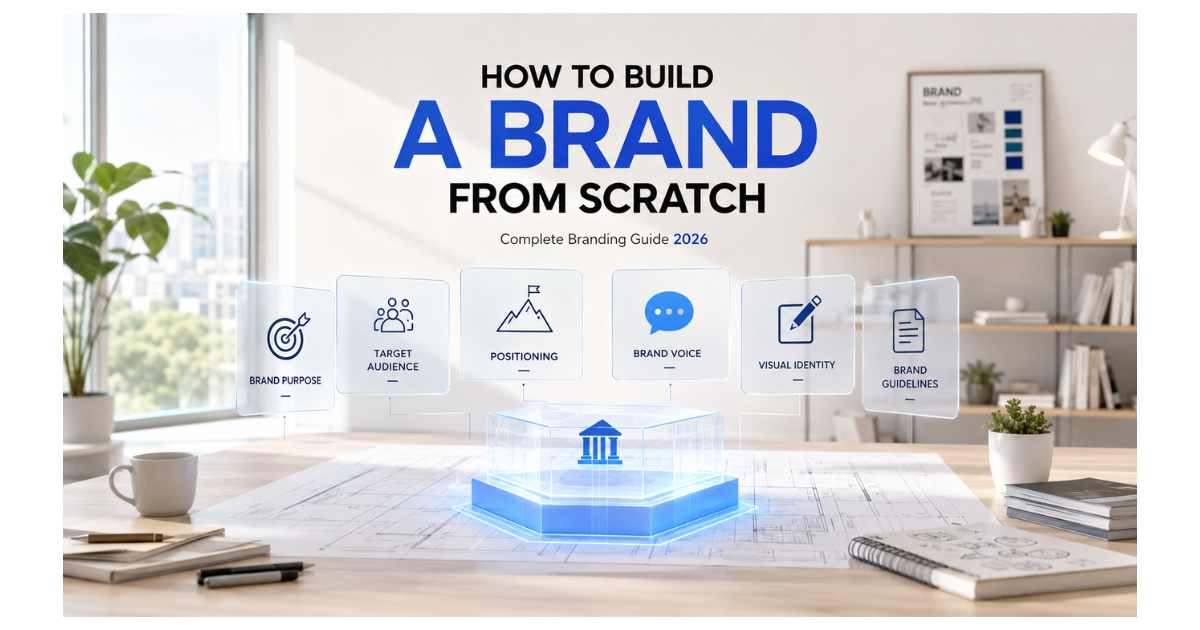
This complete branding guide walks through every step of building a brand from scratch: from defining your purpose and positioning to creating your visual system, developing your brand voice, and making your brand visible in both traditional and AI-powered search environments. These are the foundations the team at Mark Mates builds with founders who understand that a strong brand is not a marketing expense. It is the highest-returning strategic investment a business can make.
What Is a Brand? A Simple Definition
A brand is the sum of every perception, association, and expectation your target audience holds about your business.
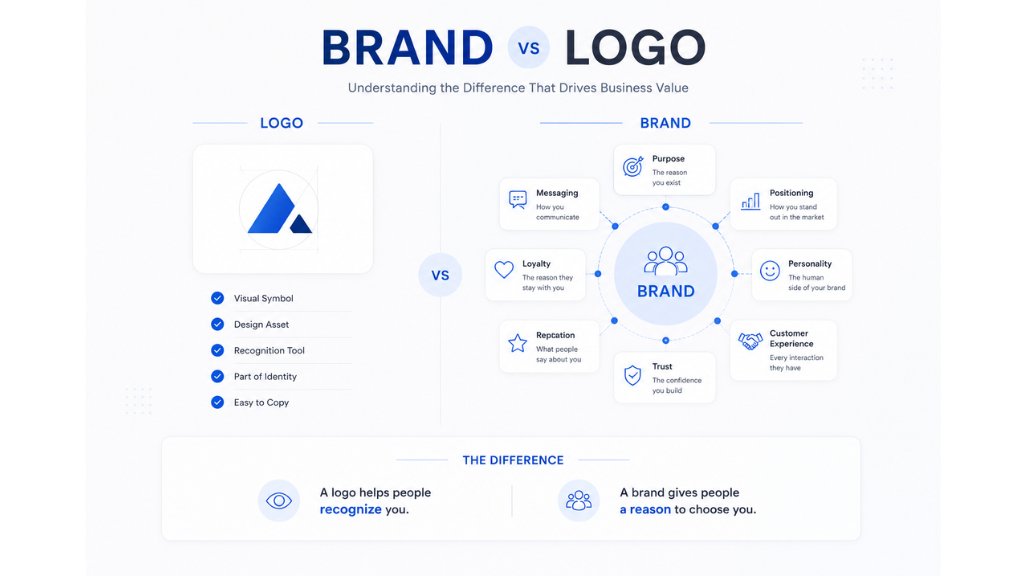
It is not your logo. It is not your color palette. It is not your tagline. Those are the visual and verbal expressions of your brand. The brand itself is the meaning those elements create in the minds of the people you are trying to reach.
Jeff Bezos defined brand simply: your brand is what people say about you when you are not in the room. That definition captures the essential truth. Brand reputation is built deliberately through consistent action, communication, and experience over time.
A complete branding guide for 2026 must address both the foundational strategic work of defining what your brand stands for and the executional work of expressing that consistently across the digital environments where your audience discovers, evaluates, and decides to trust businesses like yours.
Step 1: Define Your Brand Purpose and Mission
Every durable brand is built on a clear answer to the question: why does this business exist beyond making money?
Brand purpose is the reason your company exists that goes beyond the product or service you sell. It is the larger contribution your business is making to the customers it serves or the world it operates in. Patagonia exists to save the planet. Airbnb exists to make anyone feel like they belong anywhere. These are not marketing slogans. They are genuine operating principles that shape every decision the business makes.
Your brand mission is the more specific articulation of what your business is doing right now in pursuit of that purpose: who you are serving, what you are delivering, and what impact you are creating in the process.
The practical test of a genuine brand purpose is whether it would influence a decision your business makes under financial pressure. If the purpose only applies when it is convenient, it is a marketing statement, not a brand foundation.
Step 2: Identify Your Target Audience With Precision
Brand building requires extreme clarity about who the brand is being built for. A brand that tries to speak to everyone speaks compellingly to no one.
Your target audience for branding purposes goes deeper than demographic data. Age, location, and income level tell you who your audience is on paper. Psychographic and behavioral data tells you what they believe, what they fear, what they aspire to, what problems keep them awake at night, and what kind of brand experience would genuinely matter to them.
The questions that produce the most useful audience insight for brand building are: What does your ideal customer believe that most people in your market do not? What experience are they currently having with existing solutions that frustrates them? What would they say about your brand to a trusted friend if they became a genuine advocate?
A brand built for a precisely defined audience will consistently outperform one built for a broad potential market, because relevance compounds trust in a way that general appeal cannot.
Step 3: Build Your Brand Positioning Framework
Brand positioning defines the specific place your brand occupies in the mind of your target customer relative to every alternative they might consider.
This is the most strategically important step in building a brand from scratch, and the one most founders skip or underinvest in. Without clear positioning, every other brand-building investment produces weaker results because the foundation it is built on is undefined.
Your brand positioning framework contains five elements:
Your target audience is defined with enough specificity that your messaging can be genuinely relevant to their situation. Your market category that tells buyers what frame to use when evaluating you. Your unique value proposition that states the specific benefit you deliver that your competitors cannot credibly claim. Your key differentiators that support that value claim with provable, specific points of difference. And your positioning statement that synthesizes all of these into a single, internal reference document every function in your business works from.
The test of effective brand positioning is whether a competitor could make the same claim truthfully. If they could, your positioning is a table stake, not a differentiator. Go deeper until you find the specific ground that genuinely belongs to you.
Step 4: Define Your Brand Values and Personality
Brand values are the specific principles your business will consistently prioritize in how it operates, communicates, and makes decisions. They are not aspirational statements about the kind of company you want to become. They are behavioral commitments that describe how your company already operates at its best.
Effective brand values are specific enough to be actionable. “We value integrity” is a statement no business would publicly disagree with. It differentiates nothing. “We tell customers what they need to hear, not what they want to hear” is a value that shapes actual behavior and creates a distinctive brand experience.
Brand personality is the human character expressed through your brand’s communication: the tone, the humor or lack of it, the level of formality, the emotional register, and the specific way your brand makes people feel when they interact with it. The most useful framework for defining brand personality is to describe your brand as a person: if your brand attended a dinner party, how would it speak, what would it talk about, how would it make people feel, and who in the room would be drawn to it?
Step 5: Develop Your Brand Voice and Messaging
Brand voice is the consistent personality expressed through every piece of communication your brand produces across every channel and every context.
It is not the same as tone. Tone adjusts to context: your brand voice in a customer service interaction will be warmer and more empathetic than your brand voice in a LinkedIn post, but both should be recognizably the same brand. The voice is constant. The tone is contextual.
Your brand messaging framework defines the specific language your brand uses to communicate its value proposition, its differentiators, and its personality across different audiences and different stages of the buyer journey. It includes your tagline, your elevator pitch, your key messages for each audience segment, and the specific proof points that support each claim.
Consistent brand messaging is one of the most significant drivers of brand recognition and trust. According to Lucidpress, consistent brand presentation across all platforms increases revenue by up to 23 percent. Inconsistency, conversely, produces a brand experience that feels unreliable and untrustworthy because the buyer encounters a different brand depending on which touchpoint they arrive through.
Step 6: Create Your Visual Brand Identity
Your visual brand identity is the system of visual elements that expresses your brand positioning, personality, and values through design.
It includes your logo as the primary symbol of your brand, your color palette that creates immediate recognition and communicates personality, your typography that expresses your brand’s character through font selection and hierarchy, your imagery style that defines the visual language of your photography and illustration, and your design system that specifies how all of these elements are used consistently across every application.
The strategic principle behind effective visual identity design is that every visual decision should reinforce the positioning and personality defined in the strategic steps above. A brand positioned as a premium, high-trust provider for enterprise buyers should look and feel fundamentally different from a brand positioned as an accessible, energetic solution for early-career professionals, even if both operate in the same category.
The most common visual identity mistake is choosing design elements based on personal preference or trend-following rather than strategic alignment with positioning. A logo that your founding team loves but that communicates the wrong positioning to your target audience is a brand liability, not an asset.
Step 7: Build Your Brand Guidelines Document
Brand guidelines are the documented reference system that ensures every application of your brand, by anyone in your organization or any external agency or freelancer, is consistent with the strategic and visual framework you have built.
A complete brand guidelines document covers your brand story and purpose, your positioning statement and target audience definition, your brand values and personality description, your voice and messaging framework with examples, your complete visual identity system with usage rules, and specific guidance for how the brand is applied across your most important channels: website, social media, email, presentations, and any physical or printed materials.
The practical value of brand guidelines is that they convert your brand from something that exists in the founder’s head into something the entire business can execute consistently without requiring the founder’s involvement in every decision. That consistency is what builds brand recognition and brand equity over time.
Step 8: Launch Your Brand Across Digital Channels
Building a brand in 2026 requires deliberate presence in the digital environments where your target audience discovers, evaluates, and makes decisions about businesses in your category.
Your website is the primary owned brand environment. It should express your positioning, voice, and visual identity with consistency and give every visitor a clear understanding of who you serve, what you deliver, and why they should trust you.
Your content strategy is the ongoing expression of your brand positioning and expertise across the channels where your audience is active. Content that reflects genuine expertise, addresses specific audience problems, and is expressed in your defined brand voice builds both brand awareness and the topical authority that drives organic search and AI search visibility.
Social media presence should be channel-specific in format and tone while remaining consistent in brand voice and visual identity across platforms. The brand differentiation that makes your content recognizable across platforms is one of the most powerful brand recognition builders available at no additional cost.
SEO and GEO optimization for your brand requires consistent use of your positioning language across all digital touchpoints, a body of high-quality content that AI systems can draw from when generating answers for buyer research queries, and third-party validation including reviews, citations, and media mentions that confirms your positioning from external sources.
Step 9: Measure Brand Performance and Iterate
Brand building is not a one-time project. It is an ongoing operational discipline that requires measurement and iteration as your market, your audience, and your competitive environment evolve.
The metrics that most reliably indicate brand health are: brand awareness measured through unaided recall surveys with your target audience, Net Promoter Score as an indicator of how strongly your customers advocate for the brand, share of voice in organic search and AI-generated answers for your category keywords, sales cycle length as an indicator of how much pre-built trust your brand is creating before buyers engage with sales, and customer-reported reason for purchase as a direct signal of which positioning elements are actually driving conversion decisions.
Iterating on brand positioning should happen deliberately and infrequently. The compounding nature of brand recognition means that changing core positioning before it has had time to establish market association resets the compounding process. Iterate on executional elements: messaging, content formats, channel strategy. Hold the strategic positioning stable long enough for it to build genuine market recognition.
Frequently Asked Questions
How do you build a brand from scratch?
Building a brand from scratch requires eight sequential steps: defining your brand purpose and mission, identifying your target audience with precision, building your positioning framework, defining your brand values and personality, developing your brand voice and messaging, creating your visual identity system, documenting your brand guidelines, and launching consistently across your most important digital channels. The strategic steps must come before the executional ones. Visual identity built without strategic positioning produces design that looks good but communicates nothing specific.
How long does it take to build a brand?
Building the foundational brand strategy and visual identity takes between four and twelve weeks depending on the scope and the quality of the discovery process. Building meaningful brand recognition in your target market typically takes six to eighteen months of consistent execution. Building the deep brand equity that creates automatic preference and premium pricing power takes two to five years of sustained, consistent brand expression across every relevant touchpoint.
What is the most important element of a brand?
Brand positioning is the most important element because it defines the strategic foundation every other brand element is built on. Without clear positioning, visual identity communicates no specific meaning, brand voice has no specific perspective to express, and content has no specific angle to take. Positioning is the strategy behind every other brand decision. When positioning is clear, every other element of the brand system becomes easier to define and more effective to execute.
How much does it cost to build a brand from scratch?
Brand building costs vary significantly based on scope and execution approach. A founder-led brand strategy using structured frameworks can be completed with minimal external cost. Professional brand strategy and identity design typically ranges from $5,000 to $50,000 for SMEs and early-stage startups depending on the depth of the work. Enterprise rebranding projects can run significantly higher. The most important cost consideration is the ongoing execution cost: content, design resources, and channel presence that build brand awareness over time.
What is the difference between a brand and a logo?
A logo is a visual symbol that represents your brand. A brand is the complete system of meaning, association, and expectation your audience builds about your business over time. The logo is one element of the visual identity system that expresses the brand. Many businesses invest heavily in logo design while doing no foundational brand strategy work. The result is a professionally designed symbol that communicates no specific, differentiated meaning because there is no positioning framework underneath it.
How do you build brand awareness from zero?
Building brand awareness from zero requires a combination of consistent content that reflects your positioning and expertise, strategic presence on the channels where your target audience is most active, earned media through thought leadership and external publication, community engagement in the spaces your audience inhabits, and SEO and GEO optimization that makes your brand discoverable when buyers are actively researching solutions in your category. Consistency over time is more important than any individual tactic.
How does brand building affect AI search visibility in 2026?
In 2026, AI-powered search tools including ChatGPT, Perplexity, and Google AI Overviews generate answers to buyer research queries by drawing from the sources they have been trained on and can access. Brands with clear, consistently expressed positioning across high-quality digital content, strong third-party validation, and genuine topical authority are significantly more likely to be cited in those AI-generated answers than brands with inconsistent or generic positioning. Brand building and GEO optimization are becoming inseparable disciplines.
Conclusion: A Brand Is the Most Compounding Investment You Will Make
Every marketing dollar your business spends performs better when it is spent on behalf of a clear, well-positioned, consistently expressed brand.
Clear brand positioning makes your content more relevant. It makes your SEO more focused. It makes your paid advertising more efficient because the message resonates with the specific audience seeing it. It makes your sales conversations more productive because the brand has done pre-work on trust before the prospect ever speaks to a sales representative. It makes retention stronger because customers who chose you for a specific, clearly understood reason stay longer and advocate more actively.
Building a brand from scratch is not a creative exercise that happens once and gets filed away. It is the foundational strategic work that every other marketing and growth investment is built on top of. The brands that compound over time are not the ones that spent the most. They are the ones that defined their position clearly, expressed it consistently, and stayed disciplined about both long enough for the market recognition to build.
In 2026, with AI reshaping how buyers discover and evaluate businesses, the brands with the clearest positioning and the most consistent digital presence are the ones showing up in AI-generated answers, earning organic referrals, and building the kind of brand equity that makes growth progressively less dependent on paid acquisition over time.
At Mark Mates, brand development is the foundational work we do before any content strategy, GTM motion, or demand generation campaign is built. Because without a clear brand underneath it, every campaign resets to zero when the spend stops. With a strong brand underneath it, every campaign compounds into something more durable.